Structure Sunday: The Structure of Family

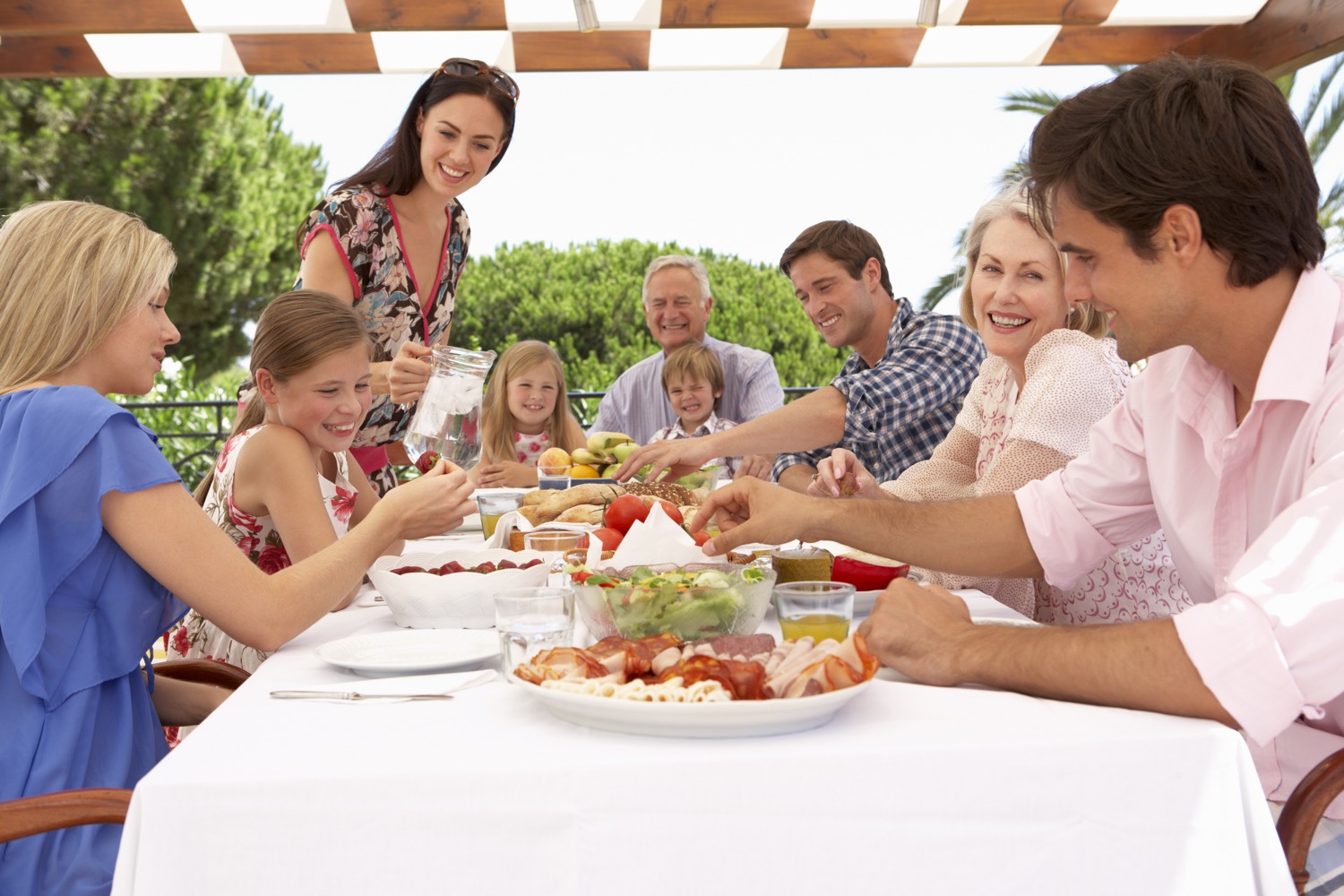
What is family and what does it do for us ? I have had a family focused type of weekend and I wanted to share some numbers and thoughts about the issue of family. 


  • The nuclear family: Two parents and their children.
  • The blended family: which is remarried or re-partnered parents each with their own children under one roof.
  • The extended family: such as sisters, uncles, grandparents, and non relatives either living in the home or elsewhere.
  • The single parent family
  • The childless family.

Consider all these and more. Add in non married partners, good friends and neighbors. All these people bear on how we live, our health and our happiness. 

Here are some illuminating data from census.gov.

About 50 years ago, 80 % of households included a married couple. Now this is down to 50 %. Some households are made up of non family members, and these are up from 10 % to about 33% in the same last 50 years. 

Two parents households with children have decreased about 15%in the last 50 years to 70% of all households with children. About 25% of all household with children only have a mother. Father only households are up to about 4% of all households with children. 

Among all households with or without children, a steady 30 % are childless. 10% of all households are single parent households with children. Households which are traditional, meaning married with children are half of what they were over about the last 50 years, going from 40 to 20 % . 

Everyone knows the saying “ It takes a village.” I would like to point out that this is not just for kids. Adults, married, single or partnered, are happier and healthier if they have strong familial and friendship ties.

Through history, we have developed families, clans and tribes for surviving and thriving. We are wired for it. But in modern times, we are more likely to reach out to friends or coworkers. People sometimes forget to reach out to those closest to them, even those with whom they live. 

I am writing to suggest that people look around and renew ties to those most near. I suggest that this include spouses and partners, children and others in the household, as well as old friends and even neighbors. These relations may not have the cachet of accomplished coworkers, but keeping these relationships healthy has deep benefits. 

It helps us with continuity, and to know our personal history. It helps with feelings of stability, especially for children. Getting along with those closest to us is not really glamourous. But it make us flexible and empathetic. It grounds us. 

Try starting with a phone call, email, or a card in the mail. Then, by all means, plan some sort of get together. The most important thing to remember is that it doesn’t have to be perfect. You don’t have to be perfect, and they don’t have to be perfect. The most important thing to do it to connect. 


Food Friday: Fasting and What To Do Instead

Fasting and cleansing make headlines. They are dramatic trendy measures taken by those seeking improved health. But do they work ? Are they safe ? 

Fasting is generally regarded as going off food for at least a day. Cleansing involves the same but with some sort of liquids and juices added back. Sometimes enemas are part of the “cleanses”.

Proponents state that they get past their hunger, and that they eventually feel good, even high. They state their bowel movements show they are getting cleaned out. Their stomachs flatten and they feel light. Who wouldn’t want all this ? 

Unfortunately, it doesn’t last. Our physical and mental vitality depends on a flux of matter and energy through our body. It is true that our body is designed to weather the temporary hardship of relative drought or famine, but under these conditions it cannot thrive. 

So many people participating in cleanses or fasts are doing so to achieve optimal health and high performance. However, to really thrive, we need optimal nutrition and optimal activity as much of the time as possible. Fasting and cleanses are not compatible with this. 

What do fasting and cleanses really do ? In many cases, they are dehydrating. This can be dangerous, especially if subjects are very young, old, or unwell. The body does burn fat and glycogen for energy, but in more prolonged fasts, muscle mass is lost. This types of metabolism actually produces more “ toxins”. It does not detoxify. 

All this provides a substantial stress on the body. Stress hormones are activated. Neurotransmitters  which help us cope with stress are activated as well, accounting for the feeling of elation and capability. 

Weight does indeed get lost, but mostly in the form of water, stool, fat and and muscle. When a normal dietary and fluid intake is resumed, most of the weight is regained. Muscle of course can be rebuilt, but this requires exercise and surplus protein in the diet. 

Colon cleanses can be dangerous. The colon has a normal bacterial flora. The importance of the balance of this flora is becoming better understood these days. Colon cleanses disturb this balance and can lead to problems with digestion, dehydration and serious electrolyte abnormalities. 

I have noticed that purveyors of these unproven and dangerous methods charge high prices. I have also noticed that they advertise to vulnerable populations, including those undergoing cancer therapy. I find this very concerning. 

The answer to all of this is very simple. It is common sense evidence based medicine and health maintenance. It is Friday, and I am thinking about the weekend. So instead of going on about this downer topic, I would like to tell you my alternative version of a quick health boost. 

I call it a “spa weekend". To me, this means I will arrange to do several key things this weekend in a concerted spirit of boosting wellness. They are as follows: 


  • Get the ideal amount of sleep all weekend. 
  • Do morning yoga. 
  • Drink green tea each day. 
  • Drink 3 liters of water each day. 
  • Do longer afternoon workouts each day. 
  • Have 3 ideal meals and 3 ideal snacks each day all weekend, heavy on protein, veggies and fruit. 
  • Soak in the tub each day. 

I might even do my own pedicure. 

That is my idea of a plan to boost wellness. I hope you can take a spa weekend sometime soon. 


Wellness Wednesday: Getting Real about Wellness Coaches

"Are health coaches a real thing? What do they actually do? Something like that sounds really expensive.” In our survey two weeks ago you said the most helpful thing for your health improvement would be a health coach. Here is the lowdown on this very real and up-and-coming service.

There are a lot of coaches out there. There are a lot of health and wellness coaches out there too. As you know, I have hung out my shingle as an "evidence based" practitioner. Accordingly, if I were to get a wellness coach, I would want one that practiced evidence based coaching. 

I have done a little homework on our behalf, and found that the American College of Sports Medicine certifies only one coaching program in the country at this time, wellcoachesschool.com. Lucky for me, the medical fitness center (health club) associated with my hospital utilizes wellness coaches certified by this school.

However, I too assumed this would be on the expensive side. Here's what I found out. First of all all, prices are cheaper if you are a member of the health club, which stands to reason. Secondly, they offered different packages. The cheapest package without membership was $200 and consisted of eight sessions over eight weeks. This would provide personal training in a small group. This sort of thing would be an out of pocket expense.

On the other hand, I was pleasantly surprised to find out that the more extensive packages involving weight management and wellness coaching for those with serious or chronic medical conditions might be covered by insurance. These programs range from $250-$750 and take place over several months time. Of course any coverage by insurance would have to be determined beforehand and would have to be based on documentation in the patient's medical record by a patient’s physician, someone like me. 

Although I was encouraged by all of this, I did come away from my fact-finding with the impression that my patients who need this most are simply not going to be able to have access to this, afford it or obtain coverage for it. 

This led me to the idea of being your own coach. This is not my idea or a new idea. A simple Google search revealed several reputable sites which deal with this topic. I will share them with you now.  

How to become your own life coach with 14 simple strategies

10 ways to be your own life coach

How to be your own life coach in four easy steps

And my favorite,

Tips from the pros: how to be your own life coach


I am thinking about getting wellness coach certification from wellcoachesschool.com. So much of what I do in the course of the day with my patients is wellness coaching. While it is true that I deliver babies and perform female pelvic surgery, I spend a lot of time and energy trying to get my patients to be well. I would like to be as good as this as possible.

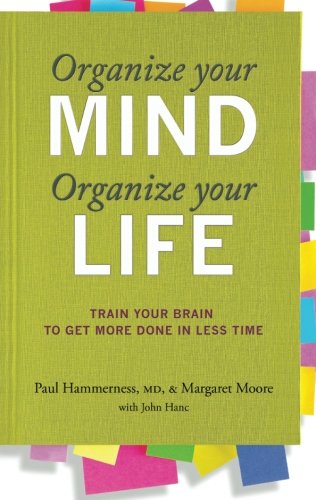
I looked into the course curriculum, and I noticed they had two key textbooks, one you get when you register for the classes, and is rather costly. The other is available on Amazon.com for a modest amount of money ( At this time a used one is $0.43 plus $3.99 for shipping. ) It is called "Organize your Mind, Organize your Life” with the subtitle,”Train your brain to get more done in less time”, by Margaret Moore and Paul Hammerness. I think this is a great place to start for people who want to be their own life coach. I know I am going to crack open this book as soon as possible. 

Beyond that I am still going to be giving continued thought to what, in practical every day terms, could help people meet their basic health goals in nutrition, fitness, and stress management.

Stay tuned for more tips on achieving wellness on next weeks Wellness Wednesday. 

Medical Monday: Weekly News Update in Obstetrics and Gynecology 

The Republican dominated House voted to defund Planned Parenthood last Friday the 19th. About a week later, the Senate rejected the same bill by a vote of 52 to 47. It turns out defunding Planned Parenthood would have allowed lawmakers to come in on budget and avoid a government shutdown on October1st. Both sides of the aisle are woking on plans to keep the government going after October 1st. I will say this: that meeting budget and funding Planned Parenthood are really two separate issues and should be treated as such. It is not as though Planned Parenthood is the ONLY straw that could have broken this camel’s back. 

The Food and Drug Administration (FDA) held a public hearing this week about the relatively new method of sterilization called Essure. This procedure involves the insertion of small coils into the inner aspect of the the Fallopian tubes as they open into the uterine cavity. Is is an office procedure without incisions, which is its appeal. However there are now 5k plus reports of complications associated with the device and more pregnancies than were intially advertised. A panel of experts criticized both the maker, Bayer Health Care Pharmaceuticals, and the FDA, in the handling of device’s testing.  A long running social media campaign has influenced the convening of this hearing. 

Long acting reversible contraceptives (LARCs) like IUDs ( intrauterine devices) have been found to be 20 times more effective at preventing pregnancy that all other contraceptive methods. In more good news, almost everyone, even childless women and women with medical conditions, are eligible to use them. Their use is up in the last few years from 1.3% to 7.2 %. The American Academy of Pediatrics recommends that they be first-line contraceptives for sexually active teens.

Most women know there is a vaccine available to prevent cervical dysplasia and cancer. But now a clinical trial from Johns Hopkins University School of Medicine has shown effectiveness in a new genetically engineered vaccine to ERADICATE existing high grade precancerous cervical lesions in half of the test subjects. Wow, fantastic ! 

Stay tuned for more news from the wild world of Ob/Gyn in next’s week Medical Monday. 

Structure Sunday: The Structure of My Reading List

Isn’t reading for kids in school ? Who has time for reading ? I hear these types of things all the time. Reading is immensely important to me. Stacks of books and magazines line my home office.

I have already blogged about the scientific evidence on the effect of reading on health in the following post: http://drginanelson.com/drginablogs/2015/2/28/structure-sunday-structure-your-mind?rq=reading

Now I am going to share how I divide my reading pie. 

  • Reading the news
  • Reading to indulge certain interests 
    •      Things that just pique my interest 
    •      Things I’m trying to do
  • Reading for self improvement 
  • Reading for Medicine
    •      To deal with a patient problem 
    •      To accomplish my annual board review 
  • Reading for business 
  • Reading for inspiration 
  • Reading for fun


Here are my current examples: 


Reading for News: 

I use Flipboard, a popular customizable news app, my Yahoo homepage which I have tailored to my interests, and News, the new Apple app included in the latest IOS operating system. I also sometimes look at two local paper newspapers. 

Interest Based Reading; 

I am always reading cookbooks, or on cooking sites. I love foodnetwork.com, and epicurious.com. My favorite cookbooks right now are” Paleo”  cookbooks like NomNom Paleo. Pinterest is the best pictorial cookbook in the universe.

I am working on a sewing project and have had to reread some stuff about free motion machine quilting. I am also reading about the work of Natalie Chanin, a designer who revitalized an Alabama community with her handmade heirloom pieces of organic cotton jersey. See alabamachanin.com. I am trying to use one of her beautiful instruction books to make a tunic out of old black t-shirts. 

I am doing quite a bit of reading about small smart energy efficient homes. My family is considering a project with these. On my desk right now is a small beautiful book called “ Convertible Homes”, by Amanda Lam and Amy Thomas. 

Reading for Self Improvement: 

I am about to dig into “ Superbetter”, by Jane McGonigal, a scientist and game designer interested in harnassing the power of gaming for self improvement and medical recovery. I am also excited to ready the giant book on my desk written by my old dorm mate Dan Levitan, The Organized Mind. Good on you, Dan. 

Reading for Medicine: 

The large stack of research articles for American Board of Obstetrics and Gynecology annual board review. I have to have them done by December 15th, but prefer to have them done by October 20th, when I go on vacation. 

Reading for Business: 

I am currently reading “Ask” by Bryan Levesque as an ebook on my Kindle app on my IOS devices. I regularly read Inc. and Entrepreneur magazines. 

Reading for Inspiration: 

I am still working my way through “ Becoming Steve Jobs”, by Brent Schlender and Rick Tetzeli. Wired magazine is a constant reliable source of inspiration. 

Reading for Fun: 

I just finished a new favorite, “ Seveneves”, by Neal Stephenson. I have ordered "Trigger Warning", a short story collection by Neal Gaiman, and just bought  paper copy of “The Martian” by Andy Weir, since I have a feeling I will want to share it. Finally I am savoring “ The Magician’s Land” by Lev Grossman, and author who I was pleased to once meet at a reading.  And yes, my favorite fiction genre is sci-fi. 

You might ask how I learn what’s out there to read. I live in an area THAT HAS NO BOOKSTORE ! I go to Amazon.com and check the recommendations. I also am a member of the online community Goodreads, where I get all kinds of ideas. I read book reviews such as the regular columns in my favorite magazines. I check the NYTIMES review of books, and the books award lists such as the Nebula Awards. Plus, I simply google things like “ The 10 best new cookbooks of 2015” or “ The ten best sci-fi novels of 2015”. 

How can I read so much ? Here’s the secret: I do it all kinds of ways. I read my paper books in the day, books on devices at night, and use Audible.com to listen to books when I drive, jog, cook, sew or do housework. Each method has a different effect and that is ok. Try them all and see what you think. 

Reading stokes the fire in my soul. So take page from this playbook and harness the power and joy of reading for yourself. And don’t be afraid to have a few things going at once. 


Food Friday: Soup Stock 

Our evening temperatures are beginning to dip into the 30s and yet, our outdoor activities continue unabated. This weekend I'm sure we will be out either observing the lunar eclipse or the Northern lights. This means we're going to get chilly. This means we will want soup. 

Soup season is here again. While I love summer with its fruit platters and salads, I adore the soups of fall. A beautiful soup makes a great centerpiece for a meal, and if made well, soups are healthy and appeal to everyone.

What does it take to make a delicious soup? It takes a well-made soup base. Some people call this broth and some people call it stock. I think when you see how it is made you will understand why it tastes so good.

The first thing you should do is roast some chicken. I realize this sounds daunting to some, but it is actually one of the simplest things you can do in the kitchen. Moreover, whole chickens are one of the most inexpensive healthy foods you can buy. Around here, we can get them from our local farmers or you can get a good whole organic chicken at Costco. You will need a roasting pan, but it need not be fancy. It should have a roasting rack. You can usually get these at secondhand stores. You will also need a meat thermometer and these are available for just a few dollars at any grocery store. This is a small price to pay for food safety. Before you start to unpack your chicken, adjust the shelf in your oven and preheat it to 425°. Read through all the instructions first, and assemble everything you need before you start. In French, this is called “ Mise en Place”, or to put in place. 

Start by reviewing food safety. Recall that raw chicken and its juices are a culture medium for bacteria. Keep everything confined to the sink or nonporous cutting boards. Open the packages in your area and do not reuse any of the utensils or surfaces for anything else without thoroughly cleaning them in hot soapy water. Once you get your chickens unpackaged, remove the giblets and rinse them. Set your hollow chickens onto the roasting rack in the roasting pan. Then, discard the packaging, wash the utensils and surfaces and finally wash your hands with hot soap and water.

Brush the surface of both chickens thoroughly with olive oil. Sprinkle them liberally with good kosher salt and freshly ground pepper. Encrust them with whatever other herbs you like. Add about an inch of liquid to the bottom of the pan. This can be water or white wine. Cover the birds loosely with foil. Roast at 425°until their internal temperature is 165 degrees deep in the flesh. For the last 10 minutes or so, take off the foil and brown the tops of the chicken until they are nice and crispy but not burned. This will serve about 10 people or a  small family for several days. 

To make broth, take all of the chicken meat of all of the bones and serve or store it. You can use it to make sandwiches, chicken salad, main dishes, and pasta. Keep all of the drippings in the pan unless they are burned black. Compress the carcasses down in the pan and place back in the oven and either bake them at high temperature or broil them until they are golden brown and dried but not burned. Take the roasting pan out and add several ingredients which will flavor the broth. Here are some choices:

  • Garlic cloves, and onion with their skin
  • Chopped carrots, Chopped celery
  • Older apples that are still good
  • Any fresh herbs and peppercorns

Cover all the ingredients with water and bring to a boil on the stove top. Boil for 10 minutes, then simmer for at least two hours.. When finished, strain and transfer to a clean cool container or containers, preparing either to use, refrigerate, or freeze. Consider adding salt at this time.

If the weather is cold, I like to cool my broth outside. This way I don't have to put hot containers of broth into a freezer or refrigerator, compromising the temperature of other items. Either hot broth or cold broth is safe, but warm broth spoils quickly, and should be stored or used promptly. 

I freeze our broth in quart containers being careful to leave about three quarters of an inch of head space at the top. Now I have a delicious base for any number of different kinds of soups or sauces. We have used this to make soups with chicken, red meat and all kinds of vegetables.

Mostly we just make soup with what is on hand. The general principle is this: Pick a soup pot of adequate size. Saute your meats, garlic, onions, and hard vegetables one by one in olive oil and spices. Once they are cooked, cover with broth and add the softer vegetables such as tomatoes and greens. Bring to a boil, then simmer until done. Season to taste. To your health ! 

Wellness Wednesday: Survey Results for your Biggest Health Challenges

Don't you like getting survey results? It's like getting the punchline to a joke or solving a puzzle. Basically you get to compare your anticipation of the results with the actual results. It's even more fun when the results you get are unexpected. 

Many thanks to those who took the time to complete the survey. The number is small, but it is more than last survey I ran.

Here are the key results:

Personal trainer and fitness women.jpg
  • Approximately three quarters of respondents felt that their health was only somewhat where they wanted it to be.
  • The biggest health challenges were divided almost equally across nutrition, fitness, weight, and stress.
  • Most everyone who took the survey took the time to write a bit about the biggest obstacle to health maintenance. Time was the most common theme expressed in a variety of different ways. Some people referred to the time demands of their job, partner, kids, house and pets. I doubt very much that these things are ever going to go away. In fact, I hope all of us always have jobs, partners, kids,  houses and pets. It sounds to me that concerted improvements in time management would be helpful across the board.
  • Respondents were uncertain and vague when asked open ended questions about what would help them the most with there health. However when given a choice of specific set of health related products, they were able to clearly choose what would help them the most. This is where the surprise came. It wasn't a product at all. Far and away the most often chosen product was a "health coach." 

Fairly recently I ran into a physician friend of mine who I thought had retired. It turns out she had actually gotten certified as a health coach. She is loving it and and really feels like she's making a difference in her patients' lives. So after I saw the results of my survey I called her up to find out a little bit more. It turns out that health coaches are probably the next big thing in preventive medical care. 

It turns out that there quite a few health coaches out there and it turns out there are a lot of courses you can take in person and online by a great many certifying organizations to become one. However, only one organization is approved by the American College of Sports Medicine, the Wellcoaches School of Coaching. (wellcoachesschool.com) It is an evidence based program which uses up to date behavioral, exercise and fitness science to help people improve their life and their health. Luckily for us, my friend was certified in this manner. She works at out local fitness center. 

All well and good. But I called her later and grilled her about insurance coverage for such services. It turns out that, yes, many insurances do cover some health coaching, which struck me as a pleasant surprise. So I am going to start utilizing her and her team for my patients. I and many other doctors do a lot of office based health coaching, but in the setting of providing specialized medical care I can only give health coaching a limited focus. 

I wonder about those without insurance, those with high deductibles, and those with insurance that does not cover health coaching. I still would like to know what resources would be helpful to people who wish to, in effect, be their own health coach. What do you think ? 


Medical Monday: Weekly News Update in  Obstetrics and Gynecology

It's a mixed week in OB/GYN news, as always.

A Swedish study indicates that women who are overweight or obese at the time of the first pregnancy are more likely to develop diabetes in the next decade or two of their life. The risk of increase is six times baseline.

The eighth circuit court of appeal in St. Louis Missouri has taken the position that forcing employers to cover the cost of contraception through their insurance “ violates the groups religious freedoms".

In other news in the war on contraception, the Congressional Budget Office has estimated that cutting off funds from Planned Parenthood for one year could "reduce healthcare access for about 390,000 people" and at least through the Planned Parenthood budget with sales tax payers about $235 million. They hasten to indicate that defunding the organization could result in"several thousand unplanned births that would drive up government costs elsewhere such as in the Medicaid budget which pays for 45% of all births in this country.

The Census Bureau reports that the percentage of people without health insurance dropped in 2014 to 10.4 % down from 13.3 % the year before.

In the department of general women's health the following finding is rather striking. When comparing the cost of institutional care for male Alzheimer's patients versus women's Alzheimer's patients the following is noted. The cost of caring for women with Alzheimer's is six times greater then for a man with the same diagnosis. This is because when man has Alzheimer’s, female family members put much more time and energy into their care, saving them from expensive institutionalization. The reverse is not true when male family members take care of women with Alzheimer’s.

In other gender gap news, the Journal of the American medical Association reports that the gender gap in academic medicine is alive and well. Despite the fact that half of all medical school graduates are and have been women for sometime, Men are 15 percent more likely to have the rank of full professor. It also shows that women generally do produce less reach her research than men, But that this may be due to lack of mentorship, institutional support, and most importantly research funding through research grants. According to the same study, men received over twice as much research funding from their employers for equipment and labs. Women researchers are also less likely to receive NIH grants than there male colleagues.

For some good news this week we will have to turn to the field of vaccines. The CDC or Centers for Disease Control found that about 90% of children under the age of three were vaccinated against the common disease entities in the years between 1994 and 2013. What did this do for us? The CDC estimates that this will have prevented 732,000 early deaths in United States alone.

Finally, also in the good news department, the flu vaccine may be more effective this year according to the CDC or Centers for Disease Control. It is estimated that it will be nearly 3 times as effective as last year’s preparation. Remember that even if the vaccine doesn't prevent flu entirely, it will decrease the severity of flu which is very important in children and other vulnerable populations.

Stay tuned for more news from the world of OB/GYN next week in Medical Monday.


Food Friday: Healthy School Lunches 

Think this is going to be a bunch of recipes ? Think again. Here is what it really takes to have your kids' school lunches be healthy. It's not what you think, and it takes a lot more than a recipe. 

A healthy school lunch that is well received by your grade school child is one of the crowning achievements of parenthood. To engineer this amazing feat, you must be ambitious, disciplined, creative and start very early in the game, like before you are even pregnant with the child. Seriously ?

Most depends on you, and this is both bad and good news. It means the obligation is upon you, but it also means you have the power. While you will see that I am emphasizing a strategy that works best if you start early in a child's life, these strategies can work on older children, teens, and in principle, even husbands !

You must lay the appropriate groundwork in your home. Your parenting should have that " just right" touch which is not too lax and not too firm. Your home should run smoothly, so that kids feel secure. Then you must learn what healthy food is, and learn to prepare it so it is easy to handle and appealing to eat. Then you start thinking about healthy school lunches. Here are your tips: 

  • Start very early on healthy eating habits for the whole family. 
  • Make sure you know about nutrition, and not just what marketers say. 
  • Lead by example, i.e. shop, cook and eat healthy yourself. 
  • Make superb healthy food a family hobby. .  
  •  Know your kids friends.
  • Foster this philosophy among your kids' friends by having them over to do cooking projects. Get them involved in the tradition of really nice healthy food. 
  • Know about school food situation. (Is there a hot lunch ?) 
  • Know about school policy ( Is food trading permitted ? ) 
  • Know the school social scene (Are there bullies ? ) 
  • Be aware of social sensitivity surrounding home packed lunch. ( Is it cool ? Uncool ? ) 
  • Involve children in the school lunch making process. 
  • Look up healthy school lunches online together. 
  • Make a shared Pinterest album of school lunch ideas. 
  • Choose and purchase their lunch containers together. Let the child have a much say as possible.
  • Observe Food safety when packing lunches. Consider a reusable ice block. 
  • Get kids involved the night before in composing and packing their lunch, at the same time you make yours ! 
  • Don’t be a purist. Include some healthier treats like dark chocolate or covered almonds ! 
  • Consider the classic note of encouragement. Consider variations such as riddles or anagrams. 
  • Enjoy the process ! 


Wellness Wednesday : Your Wellness Challenges

This Wednesday I am reaching out to understand your health challenges and what could potentially help you meet them. I work with patients nearly every day and give them information about what can improve their health. Sometimes they are able to work successfully with it and sometimes not. I am fascinated with what separates the two groups. 

I have always tried to make the process of becoming healthy accessible to everyone. I am striving to learn the pertinent behavioral science behind health habits that will enable me to help you actually make those positive health changes. 

I myself am motivated by a variety of things: healthy cookbooks, exercise videos, stories of success, and even inspirational cards that sit on my desk. 

I invite you to take my survey and let me know about your challenges and what you think could help. I am most interested in your response. Click on yoga girl below to access the survey. I promise to publish results next week on Wellness Wednesday. 


Best,

Dr. Gina 

Structure Sunday: The Structure of Your Process

How can we get done all that we want so that we can truly free up personal and family time ? The answer lies in our process. Here is a rough and simple set of guidelines that should help you improve any process that you do, from shopping for groceries, to generating a report, to buying a horse. 

Read More

Food Friday: The Healthy Junk Food

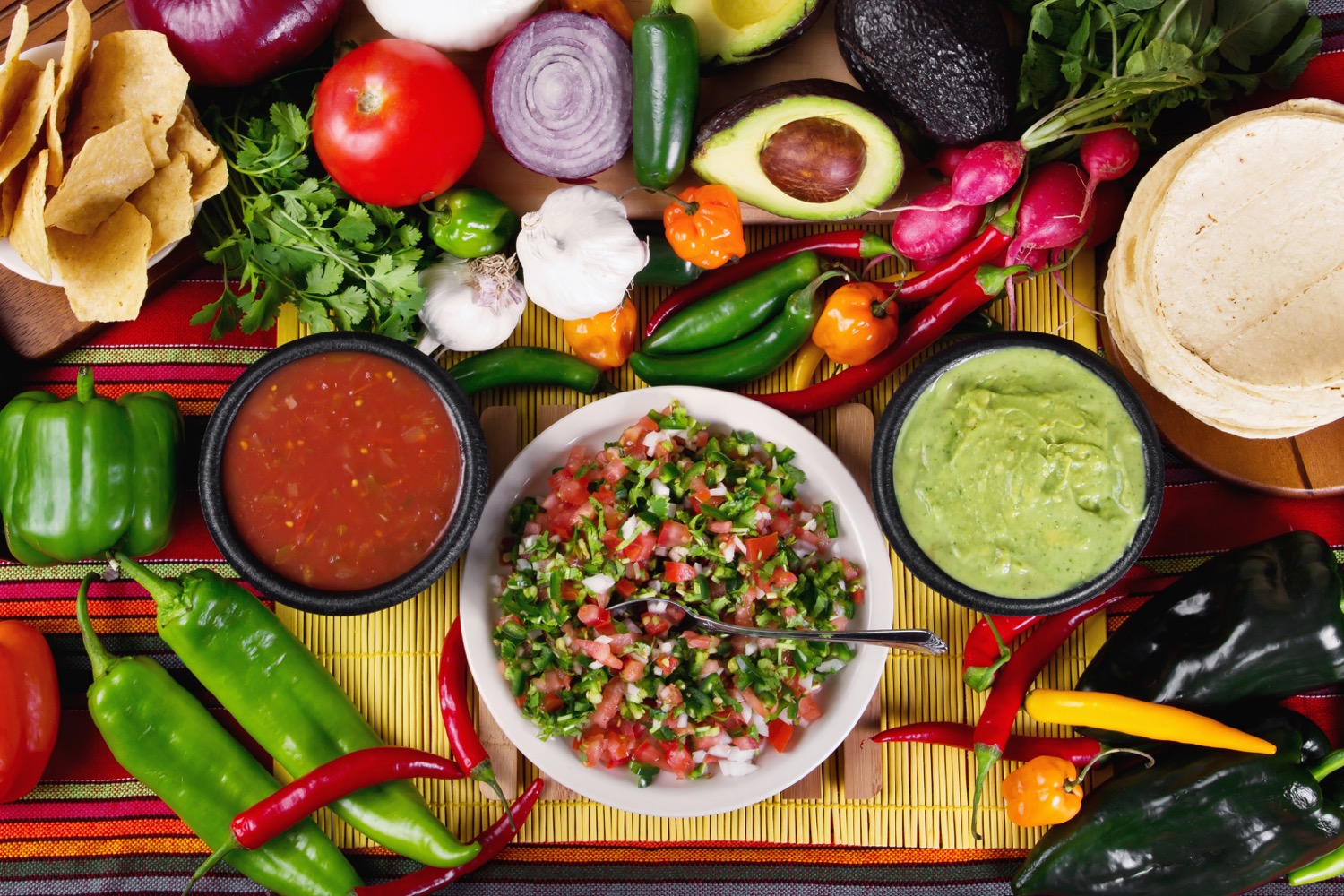
What is the secret superfood that shows up at every tailgater, and is served alongside beer and junk food ? Salsa of course. 

Salsa simply means sauce in Spanish. It is usually a tomato based sauce which can be flavored with other vegetables, fruits, and spices. Classically, it contains chilis of some kind and garlic, but the variety from there is infinite. 


Most Americans buy their salsa rather than make it. I would venture to guess it is eaten most often in this country with tortilla chips. I am going to suggest you take a walk on the culinary wild side and make your own salsa. Then take it a step further and serve it with something other than chips. 

Consider mixing and matching the following ingredients. 

Base: 

  • red tomatoes, raw or cooked, pureed or diced 
  • green tomatillos, cooked 
  • avocados, creamed or diced ( always include something acidic with these, i.e. lime juice, which prevents browning).

Heat: 

  • garlic
  • onions 
  • chilis- powdered or fresh, with sweet, fiery and smokey variations.
  • black pepper

Flavor: 

  • fruits like mango, peaches, pineapple, strawberries 
  • greens like cilantro, green onion or fresh mint
  • olives 
  • chocolate ! for mole

Texture: 

  • fresh corn 
  • chopped sweet peppers, red, green, yellow, orange
  • Beans, i.e. red or black
  • cucumbers 
  • Jicama

Dressing: 

  • olive oil
  • vinegar or citrus i.e. lemon, lime, or even orange. 


I think you can see from these ingredients that salsa is rich with healthy ingredients. Now try it on meat, fish, chicken, eggs, or really any main or side dish. Salud ! 

Wellness Wednesday: The Benefit of Trying New Things 

Nutrition, fitness and good relationships can keep us healthy. But... trying new things ? Yes, being adventurous has physical as well as psychological benefits to our health. (1) 

Adventure is a relative thing. For one person it might mean trying a new cookbook (me) while another may need to paraglide to 5000 feet above sea level (my son). But in all cases it means doing something different than your usual, and, for best results, it means getting out of your comfort zone. Comfort zones vary considerably in size.  

Does adventure have to be dangerous ? Of course not. But it should expose you to a new environment and require you to do things you have not done before. So why does it have to be all that? 

Before I explain, lets take a look at the American vacation. It is an endangered species. We are one of the few developing countries without a national policy of paid leave. Those companies who do provide paid leave do not always encourage its use, even though research shows it greatly improves employee productivity and satisfaction. When the companies do provide leave AND encourage its use, employees are reluctant to take it. Why ? Forty percent are afraid of coming back to " a mountain of work" , a third feel no one can do their work but them, a third feel they cannot afford it, and about a fifth feel guilty.  Forty-three percent of adults do not remember the last time they tried to have an adventure. Reasons for avoiding adventure range from lack of money to embarrassment. (2) Fear of one thing or another plays a role in skipping vacations. Ironically, it should be the opposite, since skipping vacations is associated with a measurable and significantly increased risk of heart disease in men and women, according to the Framingham study. (3)

And yet, we bemoan our lack of time off and we make bucket lists all of the things we don't and won't do. We execute what Tim Ferris calls the " deferred life plan". (4) Moreover, we note how every year seems to pass more quickly. 

Enter adventure. If we do get around to it, here is what happens. First, our narrow view of the world opens back up. We experience different ways of living, and see ourselves and others in a new light. Novelty and some degree of challenge have to be a part of it. This way, our confidence and competence is enhanced. A 2015 Study on newly graduated nurses found that a nontraditional outdoors adventure leadership program increased feeings of competence and confidence. When they returned to work, their transformation was felt to have impacted their entire work culture. (5) 

Adventure may even be an antidote for the accelerated passage of time. Dave Engelmann, a neuroscientist, notes that the more familiar the world becomes, the less we remember, and thus the faster times seems to pass. (3). I deduce that novelty and adventure may help us savor the time we have. 

Check out these fun resources: 

30 New Things to Try by Lifehack.com

The Beginner's Guide to Trying New Things

Staying on Top of Your Game

References: 

  1. http://www.huffingtonpost.com/laurie-gerber/are-we-having-fun-yet_b_7948588.html
  2. http://www.huffingtonpost.com/2014/08/19/americans-vacation-days_n_5682576.html
  3. http://www.newyorker.com/magazine/2011/04/25/the-possibilian
  4. http://www.bothsidesofthetable.com/2010/01/10/what-can-you-learn-from-the-4-hour-workweek/
  5. http://www.ncbi.nlm.nih.gov/pubmed/25608096


Food Friday: Cooking for One

I have written a lot about the value of meals with others. But what about the single person, student or empty nester who is often cooking for one ? 


In doing some research for this post, I found some unexpected hilarity. One of the best posts came from one of my favorite websites called Greatist.com. They addressed headlong the temptation to have a pity party. They called out tendency to wallow in loneliness and junk food. They described " sad bowls of cereal ". I was laughing and feeling bad at the same time. 

But seriously, loneliness is bad. And if a person finds themselves feeling lonely, they should name it and change it if they wish. I am no expert in this regard since I am most often surrounded by people. But I am a physician and I would encourage any one who suspects they have the corollary of loneliness, i.e. depression,  to reach out to their physician for assistance. 

But let's say you are not depressed. You're just cooking for one. You have several options. 

1. Find someone to eat with. There is a large selection of apps and websites out there to help you find a random stranger to dine with. Seriously ! Check out the HuffPost article below which features several of them. Consider also eatwith.com, mealsharing.com, lunchmeetapp.com, and cookening.com.

2. Go out to a restaurant and at least be around people. This could work if the food was healthy and good choices were made. However one of my sources listed below indicated that, as a general rule, restaurant food is consumed in greater quantities, and contains more saturated fat and sodium compared to home cooked food. 

3. Cook a nice full meal with nice regular sized recipes and have a bunch of leftovers. This is the theme in the Bon Appetite pages cited below. They take the position that you should eat only the best. Tiny little streamlined recipes do not do it for them. 

4. Cook a balanced little meal for one with little mini recipes for one. Most of the links below propose this. 

Notice I did not say have a bowl of cereal or have a TV dinner. I am talking about healthy food here. Here are some tips for literally cooking portions for one. 

Buy food strategically. Here are some examples:

1. Choose individually frozen portions such as cut fish fillets  or chicken tenders.

2. Choose foods that doing not spoil quickly such as broccoli over red lettuce.

3. Choose foods that require very little preparation since let's face it, the time we usually want to spend cooking is directly proportional to the number of people for whom we are cooking. Fresh fruit takes little prep. Sliced tomatoes with fresh mozzarella takes little more. 

4. Accept that you are going to have to add a few different components to your meal to make it nutritionally optimal.   A banana and a glass of milk is not a meal. It is, however, a decent snack. 

5. Buy large quantities of healthy foods an repackage them for easy storage and access. 


This weekend I might, through a series of unfortunate events, be spending some time cooking for one. I'll be all about the can of salmon over the complex giant salad. But you may want to do better. Here are some great recipe collections for one. 


http://greatist.com/health/healthy-single-serving-meals

http://allrecipes.com/recipes/15050/everyday-cooking/cooking-for-one/

http://www.helpguide.org/articles/healthy-eating/cooking-for-one.htm

http://www.bonappetit.com/entertaining-style/trends-news/article/cooking-for-one

http://www.huffingtonpost.com/2013/09/18/dining-app_n_3942874.html


Wellness Wednesday: Workouts for your Mind and Soul

Have you ever heard of TED talks ? If I had to think of the SINGLE BEST USE of media, TED talks would be it. Now aren’t you curious ? 

TED talks are short (usually less than 18 minutes) powerful talks by people with important and timely insights. Originally they were by just the very best and the brightest, people such as Bill Gates, Steve Jobs and Steven Hawking. To this day, they are still given by those who have a deep special interest and expertise in a subject. 

The TED talks were originally conceived in California. They have close ties with the California University system, Stanford, and all major universities the world round. They are international in scope. To be invited to speak is a rare privilege. To attend in person is enormously expensive, but all talks are provided free to everyone over the internet.  TED talk conferences have branched into all major cities, and TEDx has been developed to give smaller communities the chance to participate. 

Oftentimes Ted speakers are researchers, or high level thought leaders, heads of state, or industry innovators. Commonly they are scientists or extreme athletes. Occasionally they are artists of note. They are always fascinating, and always worth watching.

And while you can listen to TED talks on iTunes radio, podcasts, and elsewhere, they are best watched. There is nothing like seeing these sorts of people give these usually intense distillations of human wisdom and brilliance. If you want to see a great example, check out the Talk by Jill Bolte Taylor. In video format, it brings it so much more down to earth. The speakers seem more accessible, as though you might run into them in the grocery store. 

I can tell you why a TED talk is so potent. This is because I was asked to to do one at the first TEDx conference in our area. I had done public speaking before, so I thought it would be straightforward. Wow did I have a lot to learn. A TED talk is not like an academic lecture. For our conference in northwestern Montana, I had several coaches, starting weeks in advance. One came all the way from Southern California to coach us. The coaches had to tear my style apart and put it back together again. I was lecturing, whereas they needed me to actually connect on a personal level over my material. I had to explain myself in clear ordinary nonmedical language.  I had to connect, which was my biggest challenge, and I had to end with a call to action. Plus I had to get it all done in 18 minutes or less.  


There are so many stories you and your family NEED to watch at TED.org and TEDx.org. I have been showing them to my kids, family and friends for years, and they are an endless source of inspiration. The TED.org website is great in that you can chose a talk by speaker, topic, or even rating. You can get an app on any platform or you can use a computer and a browser to go to TED.org. I cannot recommend then any more highly. 


Medical Monday : Ob/Gyn News Weekly

News about Ob/Gyn topics has GOT to be important to all women. I like to read this stuff since it makes a difference in people's lives. So with a more recognizable title, I will continue to report on it. 

A paper in The Journal of the American Society of Nephrology has properly substantiated what Obs have always observed: that women who suffer from hypertensive disorders of pregnancy like preeclampsia are prone to high blood pressure later in life. Newsflash: so are their siblings, including brothers. 

Apparently prevalence studies of the breast cancer genes BRCA1 and BRCA2 in breast cancer patients were done predominantly in white populations. Taking a preliminary look at 400 black breast cancer patients, a Florida study shows 12 % of them carry one of these genes. In a similar population of white breast cancer patients, the rate is only 5 %. This has implications for screening and prevention. 

New help for older women with osteoporosis (bone thinning) may come from Human Growth Hormone. It's helpful effects seem to be particularly long lasting. 

The CDC reports we have achieved a 90% vaccination rate on polio, measles, mumps, rubella, hepatitis B and varicella (chicken pox virus). I realize this is better than it was, but, this doesn't sound too great where herd immunity is concerned. 

The CDC ( Center for Disease Control) reports that since 2012, school lunches are measurably healthier, with metrics being more fruits, vegetables, whole grains and salads. Thanks to all those lunch ladies and gentlemen as well as FLOTUS Michelle Obama. 

And in other good news, the great State of Texas has passed a strong "right to breastfeed" law. Public employers must give breastfeeding mothers time and space to pump during workdays. The law also prevents discrimination or firing related to breastfeeding at work. 

Stay tuned for more news from the world of OB/Gyn next week on Medical Mondays.